The AI Face Trend Is Real. And We Need to Talk About It.
May 01, 2026A new beauty standard has arrived. The strange part? It's never actually existed.
You know that feeling when you stop mid-scroll on someone's photo and just... stare? The skin looks incredible. The eyes are perfectly lifted. Everything is symmetrical in this way that feels almost mathematical, but somehow not filtered. Not obviously done. Just weirdly, quietly flawless.
That's AI face. And honestly, it's everywhere right now.
What began as a creative tool, a playful swipe through an app, has quietly become a new beauty standard. One that is not defined by a celebrity or an influencer, but generated by an algorithm trained on what it has been told is attractive. The result is a look that is consistent, polished, and completely unattainable in real life. And increasing numbers of women are walking into aesthetic clinics trying to replicate it.
That moment has stayed with me.
What started as a fun app feature a swipe, a laugh, a "oh wow, look at me" moment has slowly become something much bigger. A beauty standard. Not one set by a celebrity or a cool girl on Instagram, but by an algorithm trained on what it's been told attractive looks like. The result is a face that's polished, consistent, and here's the bit nobody says out loud completely impossible to actually have. And yet more and more women are walking into clinics with a photo of it, asking to look like that.
So what even is AI face?
It's not one thing. It's a blend: lifted eyes, baby-smooth skin, subtly sculpted cheekbones, symmetry that doesn't really occur in nature. The reason it's so convincing is that it doesn't look extreme. It just looks like a really, really good version of you. Which is exactly what makes it so hard to shake.
And unlike the beauty trends we've navigated before the overlined lips era, the super-arched brow phase this one wasn't created by a person. It was generated by code. By enormous datasets of images processed to reflect what is statistically "most attractive." That's a different kind of pressure, and it's one that's very easy to absorb without even realising it.
What's actually happening in clinics
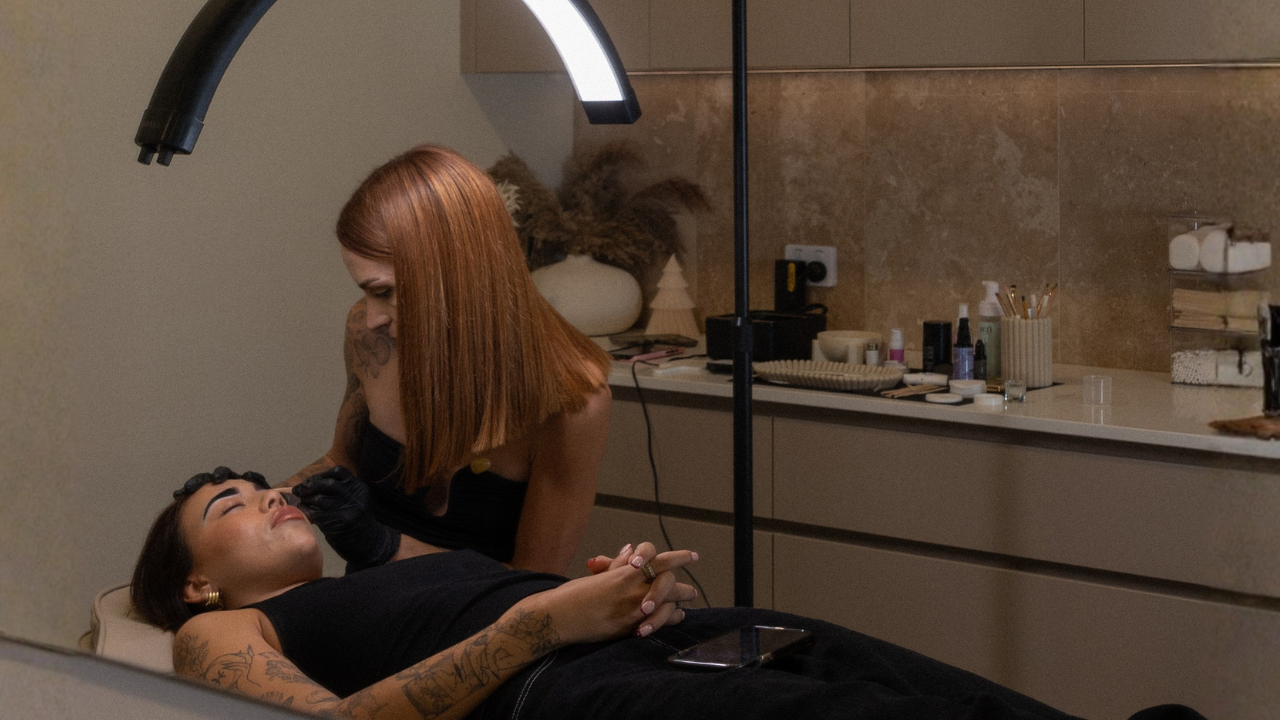
Practitioners are noticing a shift. Reference images used to come from magazines, from celebrities, from faces you recognised. Now? Clients are coming in with photos of themselves their own face, run through an AI tool, smoothed and lifted and refined and asking: can you make me look like this?
The honest answer is no. Not because the treatments don't work, but because that version of your face doesn't exist in real life.
There are real concerns here. Chasing AI-generated features can lead to over-treatment, to proportions that feel off, to a loss of the natural liveliness a face has when it moves and smiles and is just real. And beyond the physical side, there's a growing conversation about the mental health toll: this loop of adjusting and tweaking where you never quite arrive, because the goalpost is a digital construct that keeps moving.
The pressure that nobody names
Here's what makes this one tricky. The pressure isn't loud. Nobody is telling you that you need to look a certain way. It's more ambient than that it's just what you see constantly, until your own face starts to feel like the outlier. When subtle editing becomes the norm in your feed, opting out starts to feel like falling behind.
For some women, it creates discomfort with features they've never thought twice about before. For others, it becomes the nudge towards treatments not because anything is wrong, but because the AI version looks so normal. So close. So achievable.
It's neither. But the feeling is completely valid, and it's worth naming.
What we're losing
There's a bigger picture question sitting underneath all of this. If we're all drawing from the same algorithmic reference point, what happens to the faces that make us us?
Features start to converge. The things that make someone distinctive recognisable, interesting, theirs get quietly edited out. Not dramatically. Gradually. One small tweak at a time, in pursuit of an ideal that was never real to begin with. I've interviewed enough women post-treatment to know that the ones who regret it rarely regret the procedure itself. They regret losing something they couldn't quite name until it was gone.
That's something worth pausing on.
What the experts are actually saying
The conversation in good clinics has shifted. Less about transformation, more about balance. About preserving what makes your face feel like yours while supporting it thoughtfully. The practitioners I respect most are increasingly the ones encouraging people to slow down because the goal of looking refreshed and the goal of replicating a digital composite are very different things, even if they can feel similar in the moment.
There is reason to feel hopeful
Real skin is having a moment. Real texture, real faces, real variation: there's a genuine pushback building against the over-edited aesthetic, and it's growing. Transparency is becoming something people actually value.
This isn't about rejecting beauty or deciding treatments are bad. It's about widening the definition of what beautiful means. Making room for faces that aren't perfectly symmetrical but are entirely, specifically yours.
The question worth sitting with
AI tools aren't the problem. They can be fun, creative, even a genuine confidence boost when used lightly. The issue is when a digital edit quietly becomes a standard you feel you're supposed to meet.
So before the next scroll, the next comparison, the next thought about what you'd change: ask yourself not just can I look like this, but do I actually want to?
Because staying recognisably, unapologetically yourself in a world run through filters is not settling. It's actually quite powerful.
You're not a composite. You're the original.
Stay connected with news and updates!
Join our mailing list to receive the latest news and updates from our team.
Don't worry, your information will not be shared.
We hate SPAM. We will never sell your information, for any reason.