
Five Research-Backed Habits That Quietly Change How You Feel
Jul 31, 2026Levelling up your life tends to get sold to us as addition. More discipline, more optimising, more before six in the morning. The habits with the strongest evidence behind them are almost the opposite. They're small, repeatable, mostly free, and they work precisely because they ask so little of you that you can actually keep them going. Here are five, each with real research underneath it, and not one of them requires you to become a different person by Monday.
Anchor your sleep to a rhythm, not just a number
Most sleep advice fixates on how many hours you clock. The more interesting finding is about consistency. In a study done by UK Biobank drawing on more than sixty thousand people who wore movement trackers, those with the most regular sleep and wake times had a substantially lower risk of dying over the follow-up period than the most irregular sleepers, and that regularity predicted the outcome more reliably than sleep duration did. The takeaway is gentler than it sounds. You don't need a flawless eight hours. You need a bedtime and a wake time that don't lurch around from one day to the next, weekends included. Choose a wake time you can hold most days and let everything else settle around it. Rhythm is the thing your body is actually asking for.
Bank two hours a week outside
There's now a rough dose for time in nature, and it's more achievable than you'd expect. Analysing survey data from nearly twenty thousand people in England, researchers from Science Daily found that those who spent at least 120 minutes in nature across a week were significantly more likely to report good health and higher wellbeing than those who spent none, while anything below that threshold showed no measurable benefit. The reassuring part is the flexibility. It made no difference whether the two hours came in one long visit or several short ones, and the pattern held across older and younger adults, richer and poorer areas, and people with long-term illness. A park counts. A canal path counts. Two hours across a whole week is roughly seventeen minutes a day.
Walk, and forget the ten thousand
The ten-thousand-step target was never a scientific finding. It began life as a marketing figure, and the evidence has quietly moved on. Pooling fifteen international studies, Meta Analysis noted that despite how widely ten thousand steps is promoted, there's little evidence to support that specific number. What the data actually shows is that benefits accumulate well before you get there. Risk of early death fell as step counts rose but levelled off at around six to eight thousand steps a day for older adults and eight to ten thousand for younger ones. The point isn't to hit an arbitrary figure. It's to move most days, at a level you can sustain without turning your walk into another item on the to-do list.
Give your muscles two short sessions a week
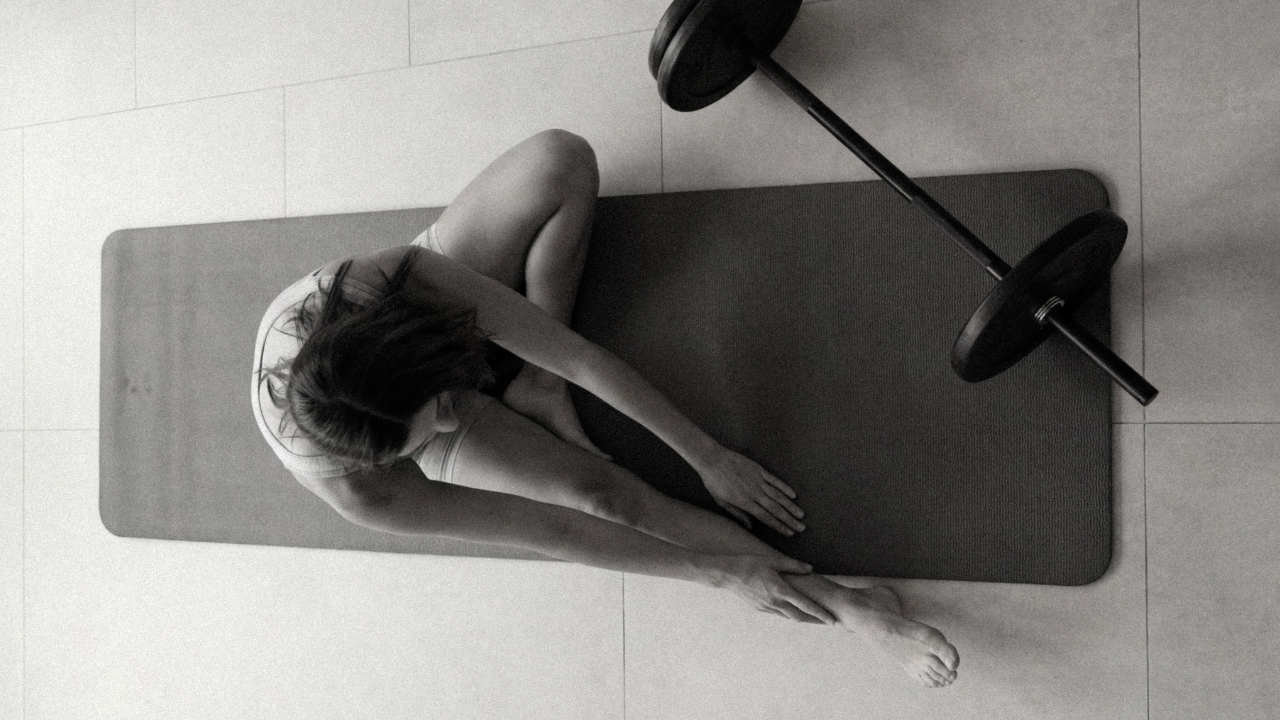
Strength work is where the return on a small time investment is genuinely striking, and it matters especially for women thinking about bone density and aging well. In a pooled analysis, between 30 and 60 minutes a week of muscle-strengthening activity was linked to a 10 to 20 per cent lower risk of death from all causes, as well as from heart disease, diabetes and cancer, independent of any cardio you do. And more is not the goal. The benefit followed a curve that flattened after about an hour a week, with no clear advantage to doing more. Two short sessions is the whole prescription. Bodyweight squats, a set of bands, a couple of dumbbells at home. It doesn't need to be a gym, and it doesn't need to be long.
Tend your closest relationships
The single best-evidenced predictor of a good life isn't a supplement or a routine. It's the people around you. The Harvard Study of Adult Development has followed the same families for more than eighty years, and its clearest finding is that the quality of your close relationships tracks with staying happy and healthy into later life more than income, fame, social class or IQ does. One detail is worth sitting with. When researchers looked at people at fifty, how satisfied they were in their relationships predicted their physical health in old age better than their cholesterol levels did. Tending your relationships, in other words, is a form of looking after your body. A regular phone call, a standing coffee, the friend you keep meaning to message. That counts as health.
Notice what these five have in common. Not one of them is about doing more. They're about doing a handful of ordinary things with a little more consistency, which is almost always where feeling better actually begins.
Stay connected with news and updates!
Join our mailing list to receive the latest news and updates from our team.
Don't worry, your information will not be shared.
We hate SPAM. We will never sell your information, for any reason.